About
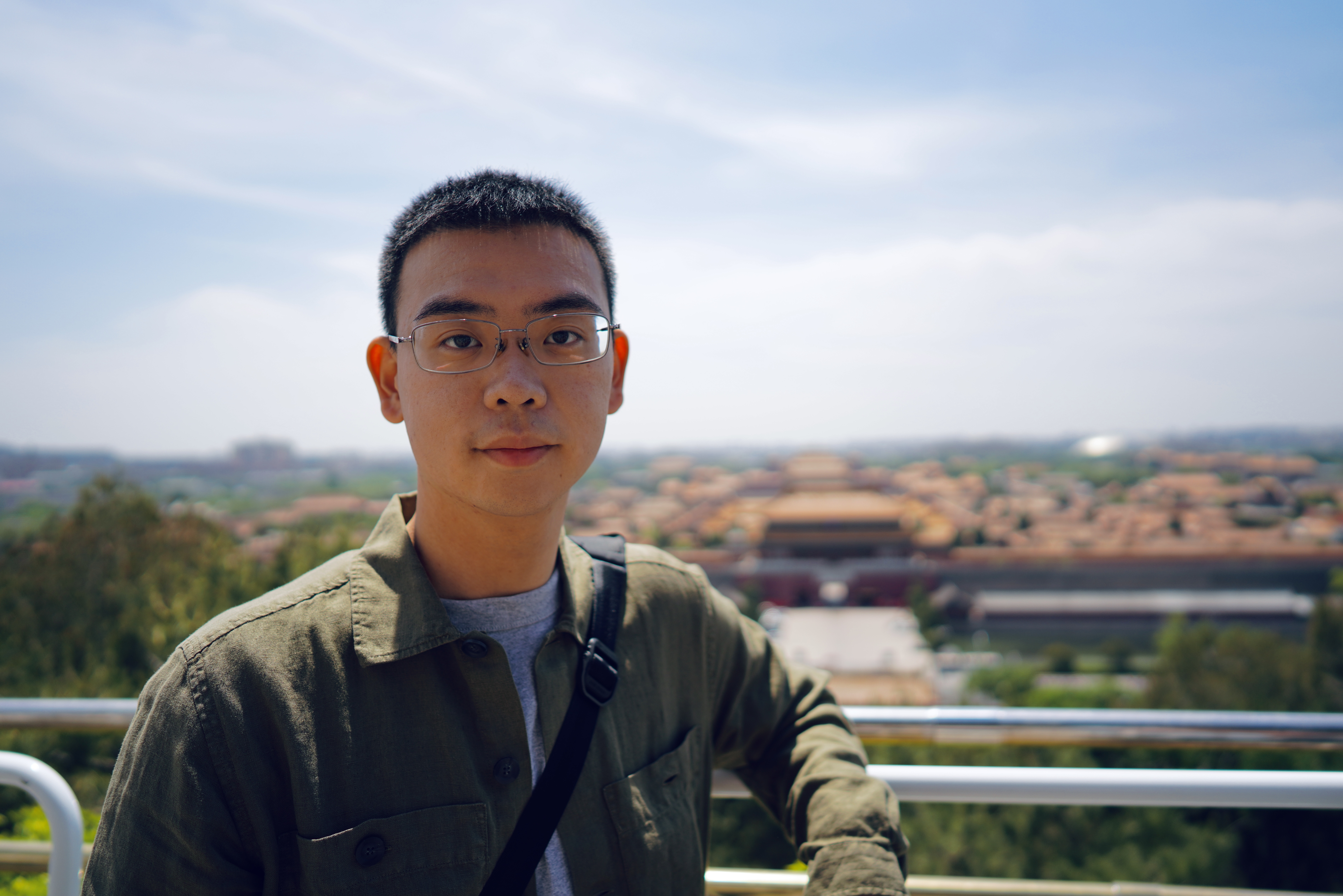
Hi, my name is Ziye Ma (马梓业), and I’m currently an assistant professor in the CS department at City Universtiy of Hong Kong. I am especially grateful to receive the honorary title of presidential assistant professor at CityU. I’m also known as Gaven, so feel free to call me whichever way you prefer. I obtained my Ph.D. from the EECS department of UC Berkeley, supervised by Somayeh Sojoudi. Prior to that, I studied Engineering Science at the University of Toronto and did research at STARS lab. The majority of my early life was spent jumping back and forth between Beijing and Toronto, both of which places I call home.
I am also a co-organizer of FAI (Foundational AI), where we organize online seminars and offline conferences. The goal is to create a focused group of researchers and enthusiasts who are keen on theoretical or foundational aspects of AI and machine learning. If you also share a similar vision, we would be glad to have you join our events, and talk more with our members.
Research
My research aims to develop explainable and efficient machine learning systems, emphasizing the exploration of new theoretical tools and perspectives. These efforts are directed towards demystifying various phenomena in modern machine learning. Mathematically, my work predominantly addresses non-convex optimization problems, drawing inspirations from matrix theory, algebraic geometry and other fields.
From a high level, my research mostly involves two parts:
- Machine learning theory, studied under the framework of non-convex landscape analysis. We aim to understand under what conditions ML practitioners can find global or generalizable solutions, and what guarantees accompany them.
- Efficient machine learning practices, guided by theories developed in the first part. We aim to tackle three aspects of efficient machine learning: data efficiency (understand what data to use), algorithmic efficieny (better practices and theories in pre/mid/post-training), and model efficiency (using smaller models to achieve similar performance).
For any inquiries, concerns, or suggestions regarding my research, please do not hesitate to contact me via email. I am committed to engaging in fruitful discussions and am always open to feedback.
Recruitment
Our lab recruits full-time PhD students annually, but the quota may vary year by year. For those who are interested please send me a direct email. Please refer to this page for more detailed information. Our lab is supported through research grants by Research Grant Council of Hong Kong, NSFC, CityU HK, and other partners. I also hold an adjuct positon at Shenzhen Loop Area Institue (SLAI), so you’re welcome to apply to my lab through SLAI as well.
Explore opportunities
2026
Bowen Zhang, Changrui Fang, Xinsong Ma, Jiaye Teng, Ziye Ma
Preprint. · 2026
Low-Rank Adaptation (LoRA) has become a standard approach for parameter-efficient fine-tuning, yet a fundamental practical question remains unresolved: how should the adapter rank be chosen? An overly small rank may lead to a poorly conditioned optimization landscape, whereas an unnecessarily large rank sacrifices the efficiency that motivates LoRA in the first place. Existing theoretical analyses provide only limited guidance on this trade-off, and their guarantees are typically established under restrictive theoretical settings. We address this gap by developing a substantially sharper landscape theory for LoRA, building on modern results from nonconvex low-rank matrix sensing. Our central insight is that the appropriate adapter rank should depend on the quality of the data-induced optimization geometry, rather than on the model alone. To formalize this connection, we introduce LoRA-RIP, a data-dependent restricted-isometry metric that characterizes the conditioning of the cross-entropy (CE) objective along LoRA-relevant low-rank directions. We prove that sufficient rank over-parameterization, with the required rank explicitly determined by the LoRA-RIP constant, eliminates spurious local minima, thereby extending existing RIP-based guarantees beyond the classical 1/3 regime. This characterization further enables principled data selection under a fixed rank budget. Experiments across language and vision tasks support these theoretical predictions, showing that rank and data quality are two coupled resources that should be jointly considered for more efficient and reliable LoRA fine-tuning.
2026
Hanzhang Wang, Tianqi Shen, Zonglin Liu, Junze He, Difan Zou, Ziye Ma
Preprint. · 2026
Large language models (LLMs) are typically pretrained in high precision but increasingly deployed with low-precision post-training quantization (PTQ). Recent studies have shown that using weight averaging during pretraining can improve PTQ performance compared with learning-rate decay, suggesting that it might provide a simple way to improve the pretraining-to-quantization transition. But the mechanism behind weight averaging remains insufficiently explained. This leads to inconsistent and fragile performance gains, thereby preventing practitioners from applying such a technique confidently. As a response, we formulate weight averaging as a trade-off between retaining training progress and improving robustness under perturbation. We further derive a continuous family of averaging kernels that unifies conventional strategies and achieves the Pareto frontier between the two competing goals. Critically, a theoretical framework for performing weight averaging under PTQ is developed. It can be shown that coarser quantization is more susceptible to perturbations, whereas finer quantization could be less affected. Thus, our results could provide unified theoretical guidance for performing weight averaging under different PTQ conditions. Experiments validate both the predicted behavior and the proposed averaging strategy. Code is available at https://github.com/MOFA-LAB/weight-averaging-for-ptq.
2026
Bingqing Jiang, Guoxi Zhang, Jasper Wang, Auric Wang, Bingning Wang, Tianyi Lin, Zichao Yu, Yujin Han, Ziye Ma, Difan Zou
Preprint. Accepted at the EvoRobust@NeurIPS 2026 workshop. · 2026
Recent work incorporates reusable skills distilled from past interactions into multimodal agent training, providing procedural guidance for long-horizon planning and tool use. However, policy optimization in these methods remains driven primarily by sparse outcome rewards, providing little supervision for intermediate decisions. Rubric-based rewards address this limitation through explicit intermediate criteria, but reliable rubrics are difficult to construct at scale and often disconnected from the procedure followed by the actor. We observe that a well-structured skill naturally specifies both how to act and what successful execution should achieve. Based on this insight, we introduce SkillRubric, which represents each skill through aligned actor-facing guidance and an evaluator-facing rubric. A multimodal verifier evaluates skill-defined goals using screenshots and tool outputs, assigning completion and progress rewards to the responsible turns. We further introduce an alternating co-evolution scheme that validates guidance revisions through paired rollouts under a frozen policy and rubric revisions offline under fixed guidance. Experiments across diverse multimodal agent benchmarks demonstrate consistent performance gains, while controlled paired rollouts further show that evolved skills provide more effective guidance for planning and tool use than their preceding versions.
2026
Tongle Wu, Huanyu Dong, Ying Sun, Ziye Ma
Preprint. · 2026
Muon has recently emerged as a promising alternative to AdamW for language model pretraining by orthogonalizing momentum matrices using Newton–Schulz iterations. Although Muon mitigates gradient anisotropy, it does not explicitly account for the curvature geometry of the loss landscape and may therefore remain sensitive to curvature anisotropy. We bridge this gap by proposing MALT (Muon Augmented by Lightweight Two-sided Preconditioning), which uses lightweight diagonal preconditioners to reduce the sensitivity of Muon to curvature anisotropy. Specifically, MALT uses two-sided diagonal preconditioners with low memory and computational overhead to approximately capture the curvature geometry of the loss landscape. It orthogonalizes the preconditioned momentum using Newton–Schulz iterations and maps the result back to define the update direction, while norm grafting controls the update magnitude. To improve the robustness of MALT to stochastic gradient noise, we further propose MALTER (MALT with Adaptive stEpsize Rescaling). Convergence guarantees are provided for MALT in the stochastic non-convex setting. Experiments on GPT-2 Small, Medium, and Large pretraining show that the proposed methods outperform Muon while maintaining nearly the same memory footprint and wall-clock time.
2026
Tianqi Shen, Jinji Yang, Runze Shi, Jianhao Ma, Jiaye Teng, Ziye Ma
Neural Information Processing Systems (NeurIPS) 2026. · 2026
Recently, Muon has gained substantial attention as an appealing alternative to Adam-like optimizers, with many works highlighting its advantages through spectral normalization and improved conditioning. Yet this positive theoretical narrative contrasts with its empirical performance in large language model (LLM) training, where Muon’s gains over Adam/AdamW are often mixed, schedule-sensitive, and not uniformly superior. To address this gap, we develop a trajectory-level theory characterizing both the strengths and limitations of Muon. We introduce a mixed-spiked matrix sensing model whose sensing operator decomposes into signal, spike, and bulk components, capturing a mixture of anisotropic structure and long-tail information reminiscent of LLM training. On top of it, we adopt a river-valley perspective in which we view the landscape as composed of a river direction flowing to the desired solution and hill directions encoding nuisance or task-irrelevant information. In the momentum-free setting, we show that Muon moves faster along the information-bearing river direction during early optimization, but can converge much more slowly near the river bottom than gradient descent. We then extend the river-valley perspective to general nonconvex objectives with momentum by studying points on the spectral river. There, while Muon converges faster early on, its orthogonalized update removes residual scale information, making it prone to overshooting and oscillation near the target solution. Together, these results suggest that our characterizations extend beyond spiked matrix sensing and motivate switching to GD-like refinement optimizers in the final phase, rather than relying only on a fixed learning-rate schedule for Muon. We also provide preliminary evidence supporting this two-stage approach in language model training experiments.
2026
Jiahe Chen, Ziye Ma
Preprint. · 2026
Zeroth-order (ZO) optimization has become increasingly popular and important in fine-tuning large language models (LLMs), especially on edge devices due to its ability to adjust the model to local data without the need for memory-intensive back-propagation. Recent works try to reduce ZO variance through low-dimensional subspace search, but subspace restriction alone leaves key optimization geometry under-exploited, motivating additional acceleration. In this work, we focus on the hidden layer training problem in which spectral optimizers like Muon outperform AdamW due to its ability to exploit weak spectral directions by orthogonalization. However, we have discovered that unlike in the first-order setting, full orthogonalization works poorly in the ZO setting since the gradient estimates are highly noisy and unreliable. To address this issue, we propose applying partial spectral orthogonalization to accelerate ZO optimization. To do so, we replace the iconic Newton–Schulz procedure in Muon with the faster, more concentrated power-iteration method so that it only amplifies dominant spectral directions. Furthermore, to improve the efficiency and generalization of the algorithm, we adopt a streaming variant of power-iteration that requires low variance in gradients, which is achieved through constraining our search inside a subspace obtained through the projection of momentum, echoing recent advances. Experiments on LLM fine-tuning show that our method can achieve from 1.5x to 4x the convergence speed of ZO-Muon, the current SOTA algorithm, across SuperGlue datasets in the OPT-13B model. Across different models, we also reach competitive final accuracies with less time in most cases compared with strong ZO baselines such as MeZO, LOZO and ZO-Muon. Code is available at https://github.com/MOFA-LAB/ZO-MOPI.git.